Is a Multi-Process Welder Worth It for a Home Shop?
A multi-process welder is worth it when you will use its extra processes and want one machine for different jobs. If you mainly weld one way, a dedicated machine may be simpler.
On this page (6 sections)
A multi-process welder is worth it for a home shop if you expect to use more than one welding process. If your projects mostly call for one method, a dedicated machine may be easier to choose and set up.
The main benefit is having options in one unit. The tradeoff is learning how each process works and checking what extra gear it needs.
Start with the jobs you actually plan to do, then compare machines by their process list, power input, controls, and included accessories.
What does a multi-process welder do?
A multi-process welder combines several welding methods in one machine. A common set includes MIG, flux-core MIG, stick, and lift TIG, though models vary.
Some machines add spot welding or support a spool gun for aluminum wire. Extra processes may need separate equipment.
For example, a machine can offer lift TIG while requiring you to buy a TIG torch separately.
The process names don't tell you everything about how a machine will fit your shop. Check the machine's manual and features to see which methods it supports, what accessories are included, and which input voltage it requires.
For a plain overview of the methods and how they differ, see MIG, TIG, stick, and other welding machine types.
When is a multi-process welder worth it?
It can be a good fit if your planned jobs call for different processes. A home shop that works on varied projects may benefit from keeping MIG, stick, and TIG options in one machine.
Before you buy, write down the projects you expect to do over the next year. Note the material, location, and process you plan to use for each.
That list can help you see whether you need the extra modes or are mainly drawn to having them available.
A multi-process machine may also suit a small shop where space is limited. One unit can cover several methods, but it still needs room for accessories, consumables, and safe work setup.
If you expect to switch processes often, look closely at how the controls and changeover work. A three-position process switch, for instance, may be a simpler fit than a machine with many settings you won't use.
Is a multi-process welder worth it for a beginner?
It can be, if you want to learn several methods over time. A machine with synergic MIG control may set a recommended current and wire feed speed based on selected wire and gas options, which can make initial setup more approachable.
Extra process options can also make a beginner's first choices less clear. Start with one method and learn its setup before moving on.
The machine's manual, practice material, and suitable protective gear matter regardless of how many processes it offers.
If you are still planning the rest of your setup, what to buy to start welding at home covers the basic equipment and supplies to consider.
Which home shop jobs can suit multiple processes?
Different projects call for different process choices, so match the machine to your actual work. MIG or flux-core MIG may fit some general repair and fabrication tasks, while stick or TIG can suit other setups and preferences.
A multi-process welder doesn't make every method interchangeable. Material, joint, position, power, and the required result all affect the choice.
Check the machine's stated capabilities and use guidance from a qualified source when a job has safety or structural consequences.
The YESWELDER 205A MIG Welder supports gas MIG, flux-core MIG, spool-gun MIG, lift TIG, and stick. It accepts 110V or 220V input, and the spool gun and lift TIG torch are separate requirements.
When is a dedicated welder the better choice?
A dedicated welder may be the better fit when most of your work uses one process. It can narrow your options and keep your decision centered on the controls and features you will use.
If you mainly want MIG, compare dedicated models with multi-process machines on wire setup, compatible input, and accessories. A multi-process model may still be useful, but unused modes do not help much if they add complexity you don't need.
A focused setup can also make it easier to learn one method before taking on another. Think about whether you want the flexibility now or would rather add another machine if your project needs change.
For MIG aluminum work, check the feeding setup carefully. Some machines need a separate spool gun, so read whether you need a spool gun for aluminum welding before treating aluminum support as ready to use.
The Forney Easy Weld 140 MP offers MIG, DC TIG, and stick welding with a three-position process switch. Its included items are a MIG gun, electrode holder, ground clamp, 20A-to-15A adapter, and one extra .030 in contact tip.
What should you compare before buying?
Compare processes, accessories, power input, controls, and the kind of work you plan to do. The process count alone doesn't show whether a machine fits your shop.
Which processes and accessories are included?
Check the full process list and note any separate equipment you need. A spool-gun connection does not necessarily mean the gun comes with the machine, and lift TIG may need its own torch.
Make a short checklist for each model:
- Processes supported
- Torches, guns, and leads included
- Extra accessories required
- Compatible wire types and sizes
- Voltage options and your available outlet
That keeps you from counting a process as ready to use before checking its setup requirements.
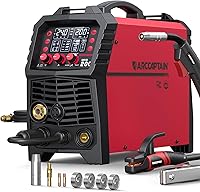
The ARCCAPTAIN MIG200 supports gas MIG, flux-core MIG, stick, spot welding, and lift TIG. It also has a spool-gun connector, but the TIG gun and spool gun are not included.
Does the machine match your power supply?
Check the machine's input requirements against the outlet you can use. Some home machines support both 110V and 220V, while others use a single input voltage.
A dual-voltage machine can offer flexibility, but it doesn't remove the need to follow its wiring and power instructions. Confirm what adapters are supplied and what the manual requires for your setup.
Don't assume two machines with a similar amp label will perform the same way on different input power. Compare the brand's stated electrical requirements and operating guidance for the processes you plan to use.
Are the controls a good fit for you?
Choose controls that you can understand and adjust for your work. A synergic setting can recommend MIG parameters from selected wire and gas details, while manual control allows you to adjust settings yourself.
Some machines also offer saved settings or adjustments for functions such as burn-back or pre-flow. Those features can help if they address a real need in your shop, but they are not a substitute for understanding the process.
The ARCCAPTAIN MIG200 review looks more closely at that model's features. For a wider comparison, see our best multi-process welders.
The ARCCAPTAIN 200A 6-in-1 Welder supports gas MIG, flux-core MIG, lift TIG, stick, spot welding, and spool-gun MIG. It accepts 110V or 220V input, and its TIG torch and spool gun need to be purchased separately.
What are the tradeoffs of one machine for several processes?
The main tradeoff is balancing flexibility against setup and accessory needs. One machine can cover more than one method, but you still need to learn each process and gather its matching equipment.
You may also need to change leads, consumables, or settings when switching methods. Check the machine's instructions for what changes between processes, and plan a place to store accessories so they don't get mixed up.
A process count can sound appealing even when only a few modes match your projects. If your work stays within one method, a simpler machine may be easier to compare and learn.
Duty cycle is another practical detail when you expect longer welding sessions. Read how much duty cycle you need in a welder and compare the brand's rating for the specific process and output you plan to use.
How can you decide if a multi-process welder is worth it?
Choose a multi-process welder if you can name several processes you expect to use and are prepared to set them up. Choose a dedicated machine if one method covers most of your work and you want to focus on it.
Before deciding, check these points:
- Which processes appear in your project list?
- Which accessories are included, and which cost extra?
- Does the machine match your available outlet?
- Do the controls suit your experience and the adjustments you want?
- Does the stated duty cycle fit the length of your sessions?
If the answers point to two or more useful processes, a multi-process machine can earn its place in a home shop. If the extra modes are only a “maybe someday,” a dedicated welder may be the clearer fit.
Frequently asked questions
Is a multi-process welder good for beginners?
It can suit a beginner who wants to learn more than one process, but extra modes add setup choices. Look for controls that fit your learning style, then start with one process and follow the manual.
A machine with synergic MIG settings may reduce some adjustments, though it does not replace practice.
What does a multi-process welder do?
A multi-process welder combines two or more welding methods in one machine. Common combinations include MIG, flux-core MIG, stick, and lift TIG, while some models add spot welding or support a spool gun.
Check which processes are included and which need an extra torch or gun.
Should I buy a multi-process welder or a dedicated MIG welder?
Choose a multi-process model if you expect to use its added processes and value having them in one unit. A dedicated MIG welder can be a more direct fit if nearly all your work uses MIG.
Compare included accessories, power input, process controls, and your project list before deciding.
Can one multi-process welder do every kind of welding?
No. A multi-process welder only supports the methods and materials its design allows, and some functions require separate accessories.
Read the manual for process limits, compatible consumables, and setup needs.
For specialized work, compare the machine's stated capabilities with the job before you buy.