Are Forney Welders Any Good?
Yes, Forney welders are good for 120-volt home projects. The Easy Weld 140 MP runs MIG, DC TIG and stick from a standard outlet, and the 140 FC handles flux-core wire without gas.
On this page (8 sections)
- What makes a Forney welder good for home projects?
- Are Forney welders any good for a beginner?
- Are Forney welders any good for MIG and flux-core welding?
- Are Forney welders any good for stick welding?
- What about TIG welding on a Forney machine?
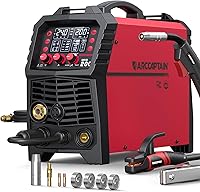
- How does the Forney 140 MP compare to the ARCCAPTAIN 135A?
- Which Forney welder should you buy for your project?
- For the question of whether Forney welders are any good: for a 120 volt home machine, yes. The 140 FC is the safe first buy for flux-core steel, and the 140 MP is the one to choose when you want three processes without adding a second machine.
Yes, Forney welders are good for 120-volt home projects. The Easy Weld 140 MP runs MIG, DC TIG and stick from a standard outlet, and the 140 FC handles flux-core wire without gas.
For a garage, a repair job or a first welding machine, the question of whether Forney welders are any good comes down to which of the two 140-series machines fits your work.
Both are small, all-metal, and built for a household circuit. Neither is a production machine, and neither will weld thick plate all day.
For the jobs most home welders actually do, the specs line up well.
What makes a Forney welder good for home projects?
The strongest case for Forney is that both Easy Weld 140 machines run on 120 volts, so you don't need a 240-volt circuit installed in your shop. That single spec removes the biggest barrier for a first welder.
The 140 MP is a 3-in-1 machine: MIG, DC TIG and stick in one case. It has infinite voltage and wire feed speed adjustments, plus a 3-position switch so you can change process quickly.
It comes with a 10 foot MIG gun, an 8 foot electrode holder, an 8 foot ground clamp, a 20 amp to 15 amp adapter and one extra .030 inch contact tip. The whole unit weighs 25.8 lb, so one person can move it around a garage.
The 140 FC is the simpler machine. It's a flux-core wire feeder with no gas needed, a 140 amp output that handles up to 1/4 in of mild steel, and support for both 2 and 10 lb wire rolls.
At 19 lb it's the lighter of the two. Forney builds both with an all-metal case and backs them with a 12 month warranty.
Those are the facts that matter. A home welder needs a machine that plugs into what's already there, adjusts finely enough to learn on, and doesn't need a gas bottle for every job.
Forney checks all three boxes with these two models.
Are Forney welders any good for a beginner?
Yes, they're a sensible first welder, and the 140 FC is the easier start. It uses .030 in flux-core wire and needs no gas, so you can weld the day it arrives.
Infinite voltage and wire feed control let a beginner dial in a weld instead of guessing between fixed settings. Forney describes the 140 FC as an ideal entry-level welder, and the feature set supports that: gasless wire, two roll sizes, and a light 19 lb body you can carry to the project.
The 140 MP is also beginner-friendly, but it asks more of you. The simple start feature and 3-position process switch make changes quick, yet you'll still need to learn three processes to get value from the machine.
If you only plan to weld steel brackets and repair jobs, the FC keeps the learning curve short.
Are Forney welders any good for MIG and flux-core welding?
Yes, both machines are set up for MIG-family work, but only one runs on gas. The 140 FC is flux-core only and needs no gas bottle.
The 140 MP runs MIG and comes with a MIG gun and .030 inch contact tip.
Flux-core wire carries its own shielding, which is why the 140 FC needs no gas. That makes it the practical choice for outdoor repairs and drafty garages where gas shielding would blow away.
The trade-off is more spatter and cleanup than gas MIG.
The 140 MP is the better base for gas MIG later. It ships with the MIG gun and tip, and Forney lists recommended accessories and consumables in its brand store.
You'll need a regulator and cylinder to run solid wire with gas. That's a real cost to plan for, not a hidden extra.
Either way, keep wire size and metal thickness matched. The 140 FC uses .030 in flux-core wire and welds up to 1/4 in mild steel.
That covers trailer repairs, gates, stands and most home steel work.
Are Forney welders any good for stick welding?
Yes, the 140 MP does stick welding and includes the electrode holder. The 8 foot holder and 8 foot ground clamp mean you can set up a stinger and ground lead without buying them.
Stick welding on a 120 volt, 140 amp machine suits light repair work: thin to medium steel, fence posts, and jobs where flux-core wire isn't practical. It's the process to reach for when you need to weld outside or on dirty metal.
Stick rod burns through light rust and paint better than wire processes.
The 140 FC cannot stick weld. It's a wire feeder only.
If stick is part of your plan, the 140 MP is the one to buy.
Remember that stick takes practice. Rod angle, arc length and travel speed all affect the bead, so budget time to run practice beads before you repair anything load-bearing.
The machine's controls are simple, but the technique is yours to learn.
What about TIG welding on a Forney machine?
The 140 MP does DC TIG, which covers steel and stainless but not aluminum. DC TIG is the right process for thin steel, stainless tubing and clean, precise work where you want control.
The machine's infinite voltage adjustment helps with TIG, since you can fine-tune the arc. You'll need a TIG torch and argon gas to run it, because the included kit is set up for MIG and stick.
Factor that into the budget if TIG is a main reason you're buying.
DC TIG will not weld aluminum. Aluminum needs AC TIG or a spool gun setup, and the product data lists neither for these machines.
If aluminum is on your list, compare dedicated machines in our guide to the best aluminum welders instead of forcing a 120 volt unit to do it.
How does the Forney 140 MP compare to the ARCCAPTAIN 135A?
The Forney 140 MP is the more versatile machine; the ARCCAPTAIN 135A is the lighter, more digital option. Forney's 3-in-1 covers MIG, DC TIG and stick, while the ARCCAPTAIN MIG135 covers flux-core MIG, lift TIG and MMA.
The ARCCAPTAIN has a large LED digital display and an auto mode that matches wire feed speed and voltage to your wire size and metal thickness. That's helpful for a beginner who doesn't want to dial in settings.
It also offers manual fine-tuning, 2T and 4T trigger modes, and Hot Start and Arc Force adjustment on stick.
At 9.48 lb, the ARCCAPTAIN is far lighter than the Forney 140 MP's 25.8 lb. If you carry the welder between jobs or work in tight spots, that matters.
The ARCCAPTAIN's 2-year manufacturer warranty is also longer than Forney's 12 months.
Where Forney wins is process range on one machine and a sturdier all-metal case. Pick Forney if you want stick and DC TIG in a single unit.
Pick the ARCCAPTAIN if portability and a digital interface matter more than having three processes in one box. You can read more in our ARCCAPTAIN MIG200 review for the larger model in that line.
Which Forney welder should you buy for your project?
Pick the 140 FC for straightforward flux-core steel work and the 140 MP when you want stick and TIG too. That's the simple decision rule for most home projects.
The 140 FC suits fence and gate repairs, brackets, trailer fixes and any job where you want to weld without gas. Its 19 lb body, two wire roll sizes and 1/4 in mild steel capacity cover the everyday steel work a home shop sees.
It's the lower-cost, lower-friction start.
The 140 MP earns its place when your projects change. A 3-in-1 machine means you can stick weld a gate in the yard and DC TIG a stainless part in the shop without a second purchase.
It weighs more and costs more, and you'll need gas for solid-wire MIG and TIG.
Before either, size the machine to the job. Our guide to what is duty cycle on a welder explains how much welding time a 120 volt unit gives you before it needs to cool.
Home projects rarely run long beads, so a light-duty cycle is usually fine. If your work is heavier or more continuous, step up in class.
If you're also comparing brands, our post on whether Everlast welders are any good covers the next tier up.
For the question of whether Forney welders are any good: for a 120 volt home machine, yes. The 140 FC is the safe first buy for flux-core steel, and the 140 MP is the one to choose when you want three processes without adding a second machine.
Frequently asked questions
Are Forney welders made in the USA?
Forney Industries is a US company based in Colorado, and its Easy Weld machines are sold through US retailers. For country-of-origin details on a specific machine, look at the label on the unit or ask the seller before you order.
Can a Forney welder run on a regular household outlet?
Yes, both Easy Weld 140 machines run on 120 volts. The 140 FC needs at least a 20 amp breaker, and the kit includes a 20 amp to 15 amp adapter so you can plug into a standard household circuit where the wiring allows it.
Does the Forney 140 MP include a gas regulator?
No, the 140 MP ships with a MIG gun, electrode holder, ground clamp, adapter and an extra contact tip. If you want to run solid wire with shielding gas rather than flux-core wire, you'll need to buy a regulator and gas cylinder separately.
Can a Forney welder weld aluminum?
Not easily. These 120 volt machines are set up for steel, and the product data lists no spool gun or aluminum process.
For aluminum, look at a dedicated AC TIG or MIG setup instead.