Can You Weld Copper With a MIG Welder?
Yes, you can weld copper with a MIG welder, but it is harder than steel. Copper conducts heat away fast and needs a matching copper filler wire plus shielding gas, so a steady machine with good heat control matters more than usual.
On this page (9 sections)
- Can you weld copper with a MIG welder at all?
- Why is copper harder to MIG weld than steel?
- What wire and gas do you need to weld copper?
- What machine settings do you need for copper?
- Where does MIG copper welding go wrong?
- Can you weld copper to other metals with MIG?
- What safety gear should you wear for copper welding?
- Is MIG the right choice, or should you use TIG?
- So, can you weld copper with a MIG welder?
Yes, you can weld copper with a MIG welder, but it is harder than steel. Copper conducts heat away fast and needs a matching copper filler wire plus shielding gas, so a steady machine with good heat control matters more than usual.
The short version: it can be done, the setup has to be right, and it is not the job to learn MIG on. This guide walks through what copper does at the arc, the wire and gas you need, and where a normal steel setup falls short.
Can you weld copper with a MIG welder at all?
Yes, MIG can join copper, and it is one of the more practical ways to do it if you already own a wire-feed machine. The process is the same as steel: an arc melts wire into a shielded puddle that fuses the parts.
What changes is the metal. Copper pulls heat out of the weld zone much faster than steel, so the arc has to work harder to keep a puddle.
The filler also has to match the base metal, or the joint will not behave like copper.
So the question is not really whether a MIG welder can weld copper. It is whether your machine, wire and technique are set up for it.
A basic steel setup will struggle; a machine with good output and a stable feeder has a real chance.
Why is copper harder to MIG weld than steel?
Copper's heat behavior is the main problem. It draws heat away from the arc so quickly that the puddle can freeze before the two edges fuse.
That leaves a cold, weak-looking bead that looks joined but isn't.
Copper is also softer and more prone to distortion when it gets hot. A weld that runs too hot or too slow can warp a thin sheet before you notice.
There is a material match issue too. Mild-steel MIG wire is not the right filler for copper-to-copper work, so a standard spool will not do the job.
The wire, gas and heat all have to be chosen for copper from the start.
What wire and gas do you need to weld copper?
Use copper or copper-alloy filler wire and an argon-rich shielding gas. Those are the two supplies that make a MIG copper weld possible, and they are different from a steel setup.
- Filler wire: a copper or copper-alloy MIG wire that matches the base metal.
- Shielding gas: argon, or an argon-rich mix, rather than a standard steel mix.
- Clean metal: bare, shiny copper with no oxide, paint or oil on the joint.
- A solid ground: copper conducts well, but a poor clamp still ruins the arc.
Check that your machine's wire drive and liner suit the filler you plan to run. Softer copper wire can kink or birds-nest if the feed path is set up for stiff steel wire.
Does preheating help when welding copper?
Yes, preheat helps a lot. Warming the copper before you strike the arc reduces how fast heat drains away, so the puddle forms and fuses more easily.
Use a heat source suited to the part size and keep the temperature even. For thin sheet, go gently; too much heat causes distortion before the weld even starts.
On thicker stock, a modest preheat can turn a cold, stubborn bead into a clean one.
What machine settings do you need for copper?
Start hotter than you would on steel of the same thickness and keep the travel steady. Copper's heat drain means you often need more current and a slightly slower pass than the same joint in steel would take.
Keep the wire feed consistent. A stuttering feeder shows up fast on copper because the puddle has less margin for error.
Set voltage and wire speed, run a test bead on scrap of the same copper, and adjust from there.
Note that copper welding is not usually a job where auto-synergic steel settings carry over. On a multi-process machine, the aluminum and steel programs are tuned for those metals, so treat copper as its own setup.
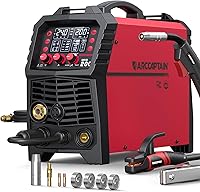
The LOTOS MIG225SP makes the job easier because it has the current range and a stable feeder. Its 6-in-1 layout covers MIG, flux-core, stick, lift TIG and spot, so it suits a home shop that tackles more than one metal.
The large LED screen and auto parameters speed setup, and voltage trim lets you fine-tune the bead. If you are weighing machines, our guide to the best MIG welder for home use covers the home-shop options.
Where does MIG copper welding go wrong?
Cold laps and poor fusion are the usual failures. The bead sits on top of the metal instead of fusing into it, and it can crack or pull apart under load.
The second common problem is distortion on thin copper. Too much heat in one spot warps the sheet, and no amount of grinding fixes a warped panel.
Third is contamination. Copper oxide, oil or leftover flux from a previous repair keeps the puddle from wetting the metal.
Clean with a dedicated method for copper, then weld while the surface is fresh.
If a bead looks tall, rounded and sitting on the surface, stop and fix the setup. That is a cold weld, not a finished one.
Can you weld copper to other metals with MIG?
It depends on the pair, and some combinations are much harder than copper to copper. Copper to steel and copper to brass each behave differently at the arc, and the filler choice changes with them.
For copper to steel, the two metals melt and cool at different rates, so the joint stresses as it sets. Copper to aluminum is harder still because the two do not form a friendly alloy at the weld.
Treat mixed-metal copper work as an advanced job. Practice on scrap of both metals before touching a real part, and expect to spend more time on fit-up and heat control than on a same-metal joint.
What safety gear should you wear for copper welding?
Treat it like any hot arc job: shade, gloves, sleeves and good ventilation. Copper welding can throw more fume than steel, so airflow matters.
An auto-darkening helmet that reacts quickly keeps your eyes protected while you chase a fast-moving puddle. The ARCCAPTAIN helmet auto-adjusts its shade and delay to the arc brightness, and its 1/1/1/1 lens gives a clear view of the pool.
Seven arc sensors trigger darkening in 1/30000s, and the rechargeable battery runs for a long stretch between charges. A clear, fast view helps most when you are judging a copper puddle that cools quickly.
Is MIG the right choice, or should you use TIG?
MIG suits thicker copper and faster work; TIG suits thin copper and fine control. Pick the process that matches the part, not the one you like best.
MIG lays down metal quickly and is easier to run on larger joints where you want a steady bead. TIG gives you independent heat control and a cleaner arc on thin sheet, which copper often needs.
If you only own a MIG machine, copper is still doable on the right parts. If you are shopping for a machine that handles several metals, compare a MIG that also runs TIG and stick.
For a tighter budget, our roundup of the best MIG welder under 500 covers the value end.
At the top end, the Millermatic 211 PRO runs on 120V or 240V with a tool-free plug, and it supports mild steel, stainless, aluminum with a spool gun and flux-cored wire. Auto-Set takes the guesswork out of setup, and the angled cast-aluminum drive keeps the feed steady.
For a shop that wants one dependable MIG for mixed-metal work, it is the strongest of the three here.
So, can you weld copper with a MIG welder?
Yes, you can weld copper with a MIG welder when you use copper filler wire, an argon-rich gas and a clean, preheated joint. It is not a beginner's first bead, but a capable machine makes it practical.
Pick a machine with enough output and a steady feeder, then practice on scrap copper before a real part. If your shop also works aluminum, our guide to whether you can you weld aluminum with a mig welder covers that setup next.
Frequently asked questions
What wire and gas do you use for MIG welding copper?
Use a copper or copper-alloy MIG wire that matches the base metal, and run argon or an argon-rich mix as the shielding gas. Standard mild-steel wire is not the right filler for a copper-to-copper joint.
Is MIG the best way to weld copper?
MIG works well for thicker copper where you want a fast, steady bead. TIG is often used on thin copper because it gives more heat control, while MIG suits builders who already own a solid wire-feed machine.
Why does copper welding go wrong so often?
Copper conducts heat away quickly, so the joint cools before the weld pool fuses properly. Preheat, clean metal and a higher heat setting help, and thin copper can distort if the arc stays too long in one spot.