Which Welding Machine Is Used for Pipeline Work?
A DC stick welder is a common welding machine for pipeline work, especially for portable field setups. Choose equipment only after checking the job’s approved procedure, required process, power supply, and output.
On this page (7 sections)
- What welding machine is used for pipeline work?
- How do you choose a welding machine for pipeline work?
- When should you consider TIG or a multi-process machine?
- How should you set up and care for a field welder?
- What mistakes should you avoid when choosing a pipeline welder?
- Which welding machine should you choose for a pipeline job?
- FAQ
A DC stick welder is a common welding machine for pipeline work, especially when a portable field setup and outdoor process fit the job. The right equipment depends on the approved welding procedure, available power, and required output.
Stick welding, also called shielded metal arc welding or SMAW, uses a consumable electrode. TIG uses a tungsten electrode and a different setup, so the job’s procedure must guide the choice.
What welding machine is used for pipeline work?
A DC stick welder is a common choice for field pipeline welding. Its portable setup and outdoor use suit many field situations, but each job has its own requirements.
The material, joint, position, required passes, and approved procedure can change which process and equipment are allowed. Have qualified welding personnel confirm the requirements before choosing a machine.
For a plain-language overview of welding machine types, see how stick and TIG compare with other processes. A single job may use more than one process if the approved procedure allows it.
Is a welding machine for pipeline work always a stick welder?
No, a pipeline job may allow different processes. Stick is a common field choice, while TIG may suit specific passes or applications when the procedure permits it.
Don’t choose by the word “pipeline” alone. The job documents and qualified personnel determine the process, machine, and setup.
How do you choose a welding machine for pipeline work?
Start with the approved procedure, then compare the required process, power, output, and duty cycle. A high amp figure or a light case does not mean a machine fits the job.
Check these points before comparing models:
- Process: Confirm whether the work calls for stick, TIG, or another process, and whether the machine supports it.
- Input power: Match the machine’s input voltage to the power source available at the job. A dual-voltage machine still needs a suitable supply and setup.
- Output and electrode range: Confirm the required amperage and electrode type and size. Don’t assume that a machine’s maximum output is the setting you need.
- Duty cycle: Compare the duty cycle at the output and input voltage you expect to use. A rating at one setting doesn’t describe every setting.
- Transport and accessories: Consider how far the machine must be carried and whether its cables, holder, and other required accessories suit the work.
The welder duty cycle guide explains how to read duty cycle ratings. For pipeline work, compare ratings against the expected work rhythm and the procedure.
Does portability matter for field welding?
Portability matters when you need to carry equipment between work areas. Weight, a handle or shoulder strap, and cable length affect transport and setup.
The Lincoln Electric Weld-Pak 225i is a dual-voltage DC stick/TIG machine with a 10–225 amp output range and a stated 20 lb unit weight. Its included work and electrode cables are each 13 ft long, and it supports Touch Start TIG with additional accessories.
It suits buyers who want one machine for stick work and separate approved TIG tasks. Skip it if the required process, output, duty cycle, or power supply doesn’t match the job’s procedure.
The ARCCAPTAIN 220A Stick Welder weighs 15.45 lb and includes a handle and shoulder strap. Its stated current range is 20–220 amps, it supports 110V/220V input, and Lift TIG requires a separately sold torch.
Its synergic control matches current and voltage after you select the rod diameter, while hot start and arc force are adjustable. Choose it if those controls and its portability suit your work; skip it if the job requires a different process or its power and output don’t meet the procedure.
When should you consider TIG or a multi-process machine?
Consider TIG when the approved procedure calls for TIG, or when you also have separate jobs that need it. A multi-process machine can cover more than one kind of work, but extra modes do not replace a job-specific equipment check.
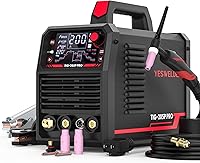
The YESWELDER TIG-205P combines stick, DC TIG, and pulse TIG. It has auto-sensing 110V/220V input and is not suitable for aluminum welding.
Choose it if those process options fit your work and the procedure permits the machine. Skip it for aluminum or when the required pipeline process and setup don’t match its capabilities.
The Lincoln Electric Square Wave 205 is a TIG machine with stick capability. Its described kit includes a TIG torch, foot control, gas regulator and hose, electrode holder, ground clamp, and 120V and 230V adapters.
Consider it if you need a TIG-focused machine with stick capability for other approved tasks. Skip it if you need a machine selected for a specific pipeline procedure and qualified personnel have not confirmed its fit.
For a more direct look at process trade-offs, read TIG vs stick welding. If your work is for a home shop, compare options in best stick welders.
How should you set up and care for a field welder?
Set up the machine to match the approved procedure and its input power before striking an arc. Keep the work area clear, connect the cables as directed by the manufacturer, and check the ground connection and electrode holder.
Confirm that the available supply matches the selected input voltage and that cables and connections are in suitable condition. For the ARCCAPTAIN model, its instructions specifically say to power it on only after the screen turns off and the fan stops running.
During work, follow the machine’s duty cycle and allow cooling when required. Keep vents clear of dust and debris, store cables without sharp bends, and inspect leads and clamps for damage before each use.
What mistakes should you avoid when choosing a pipeline welder?
The main mistake is treating a machine’s headline output or portability as proof that it is approved for the job. Process, power, duty cycle, electrodes, and procedure requirements must all line up.
Common buying and setup errors include:
- Choosing by maximum amperage without checking output at the required setting.
- Assuming a 110V/220V machine will deliver the same output on either supply.
- Ignoring duty cycle when the work involves repeated or long welds.
- Buying a TIG option because it has more modes, without confirming the procedure calls for TIG.
- Assuming a home or shop machine is suitable for pipeline welding because it uses stick.
- Starting work without confirming the electrode, setup, and welder qualifications.
A portable machine may help with transport, but it doesn’t remove any job requirements. Ask qualified welding personnel to confirm the complete setup before work begins.
Which welding machine should you choose for a pipeline job?
Choose the machine that matches the approved procedure and available power. For a general portable field setup, DC stick is a common starting point; choose a TIG or multi-process option only when the work calls for those capabilities.
The Lincoln Electric Weld-Pak 225i suits buyers comparing dual-voltage stick and TIG capability. The ARCCAPTAIN 220A suits buyers who value carrying ease and adjustable stick controls.
The YESWELDER TIG-205P and Lincoln Square Wave 205 are for buyers with separate TIG work or a procedure that specifically calls for TIG.
Before buying or setting up any of them for pipeline work, have qualified personnel confirm process, output, input power, duty cycle, electrode needs, and procedure compliance. For a broader equipment comparison, start with welding machines and their types.
FAQ
What type of welding machine is commonly used for pipeline work?
A DC stick welder is a common choice for field pipeline work because the process suits portable setups and outdoor conditions. The job’s approved welding procedure determines the required machine, process, output, and other limits.
Confirm those details with qualified welding personnel before choosing equipment.
Is a TIG welder used for pipeline welding?
TIG can be used for some pipeline welds when the approved procedure calls for it. The procedure determines which process suits the material, joint, and passes.
A TIG machine’s features alone don’t make it suitable for a particular pipeline job, so confirm the requirements before selecting one.
Can a small portable welder handle pipeline work?
Portability helps when equipment must move between field locations, but size and weight don’t prove a machine fits the job. Check the required process, output, input power, duty cycle, electrode needs, and procedure.
Have qualified welding personnel confirm the machine and setup before work begins.
Can I use a home stick welder on a pipeline?
A home stick welder uses a process common in some field pipeline work, but that alone doesn’t make it suitable for a pipeline weld. The approved procedure, power, output, electrode requirements, and welder qualifications all matter.
Use a machine only when it meets the requirements for that specific job.
Frequently asked questions
What type of welding machine is commonly used for pipeline work?
A DC stick welder is a common choice for field pipeline work because the process suits portable setups and outdoor conditions. The job’s approved welding procedure determines the required machine, process, output, and other limits.
Confirm those details with qualified welding personnel before choosing equipment.
Is a TIG welder used for pipeline welding?
TIG can be used for some pipeline welds when the approved procedure calls for it. The procedure determines which process suits the material, joint, and passes.
A TIG machine’s features alone do not make it suitable for a particular pipeline job, so confirm the requirements before selecting one.
Can a small portable welder handle pipeline work?
Portability helps when equipment must move between field locations, but size and weight don’t prove a machine fits the job. Check the required process, output, input power, duty cycle, electrode needs, and procedure.
Have qualified welding personnel confirm the machine and setup before work begins.
Can I use a home stick welder on a pipeline?
A home stick welder uses a process common in some field pipeline work, but that alone doesn’t make it suitable for a pipeline weld. The approved procedure, power, output, electrode requirements, and welder qualifications all matter.
Use a machine only when it meets the requirements for that specific job.