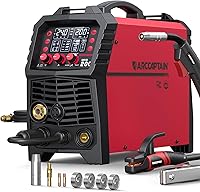
Can a MIG Welder Weld Stainless Steel?
Yes, a MIG welder can weld stainless steel, as long as it runs stainless filler wire and a matching shielding gas. A standard mild-steel setup won't do it; the wire and gas change, and the machine needs enough control to run them well.
On this page (8 sections)
- Can a MIG welder weld stainless steel at home?
- What wire do you need for stainless steel MIG welding?
- What shielding gas does stainless steel MIG welding need?
- How do you set up a MIG welder for stainless steel?
- Which MIG welder features matter for stainless steel?
- What problems show up when MIG welding stainless steel?
- Can you weld stainless steel with flux-cored wire in a MIG welder?
- So, can a MIG welder weld stainless steel?
Yes, a MIG welder can weld stainless steel, as long as you load it with stainless filler wire and the right shielding gas. A machine set up for mild steel won't do it without those two changes, plus enough control to run thin stainless without burning through.
That's the short answer. The rest of this guide covers the wire, the gas, the settings and the machine features that decide whether a MIG welder handles stainless well at home.
It's a different job from welding mild steel, but it's a job most capable MIG welders can do.
Can a MIG welder weld stainless steel at home?
Yes, and it's one of the most common uses for a home MIG welder. Stainless steel is welded with the same basic process as mild steel: a wire feed, a shielding gas and an arc.
The difference is what goes into the machine.
The filler wire must be stainless, not mild steel. The shielding gas must suit stainless too, because the standard mild-steel mix of argon and CO2 can leave carbon in the weld.
Change both and the process works.
The bigger limit is the machine itself. Thin stainless, like a 20-gauge sheet or a repair on a kitchen fitting, needs low, steady heat.
A welder with infinite voltage and wire feed control handles that better than one with fixed steps. That's the real question when you choose a MIG welder for home use.
What wire do you need for stainless steel MIG welding?
Use a stainless steel MIG wire that matches your base metal, usually 308L for common 304 stainless. Marine-grade 316 stainless calls for 316L wire, which resists corrosion better in salt air.
The "L" stands for low carbon, and it helps the weld resist corrosion after cooling. For most home jobs on 304 sheet, 308L is the practical default.
For a boat fitting or coastal railing, go with 316L.
Wire diameter matters as much as the grade. A .030 in wire suits thin sheet and general repair, and it's the size most home machines list in their drive roll options.
A .035 in wire feeds more metal and suits thicker sections. Loading .030 in wire into a roll set up for .035 in causes feed trouble and a poor bead.
What shielding gas does stainless steel MIG welding need?
Use a trimix blend or a low-CO2 argon mix for stainless, not the straight CO2 some welders run on mild steel. CO2 is cheap and welds mild steel well, but in stainless it can add carbon and dull the corrosion resistance.
A trimix of argon, helium and a small amount of CO2 is a common choice. The helium helps the arc start and carry heat on thicker stainless.
A two-gas argon mix with a low CO2 share also works for lighter work.
Gasless stainless flux-cored wire exists, and it's useful outdoors where wind would blow gas away. It leaves slag you have to chip and clean, and the bead is usually rougher.
For clean bench work indoors, gas-shielded wire gives the better finish.
How do you set up a MIG welder for stainless steel?
Switch the wire and gas first, then set heat low and adjust from there. Stainless conducts heat more slowly than mild steel, so it overheats and warps faster at the same settings.
Start with the thickness chart for your machine and the wire size you loaded. Set voltage and wire feed speed on the low side of the chart, run a test bead on scrap of the same grade and thickness, and adjust one control at a time.
Thin stainless often wants a faster travel speed than mild steel to keep heat from building in one spot.
Clean the joint before welding. Stainless needs the mill scale, oil and any surface contamination removed, or the weld can come out porous or discolored.
A stainless wire brush kept separate from your mild-steel tools helps avoid cross-contamination. Let the part cool between short beads on thin sheet, because a stitch weld pattern controls heat better than one long pass.
If you're shopping for a machine that runs stainless wire well, see our roundup of MIG welders under 500.
Which MIG welder features matter for stainless steel?
Adjustable voltage and wire feed speed matter most, because thin stainless leaves little room for a heat setting that's slightly too hot. A machine with infinite control lets you dial in a bead instead of choosing between two steps.
Spool gun support matters if you plan to weld aluminum as well, though stainless runs through the standard MIG gun. A smooth drive system matters more here, since stainless wire can kink and birdnest if the feed is rough.
An angled cast-aluminum drive and a quick-select roll handle that better.
Duty cycle matters for longer jobs. Stainless work often means short beads with cooling time, which suits a modest duty cycle, but a higher one gives more headroom.
Pulse MIG is an option on some machines and can help control heat on thin stainless. Our YESWELDER 160A review covers a compact option for these controls.
Which welder suits a first stainless project?
The Millermatic 211 PRO is the strongest option here for stainless work, because it combines wide heat control with features that help on thin sheet. Its Auto-Set function takes material, gas, wire diameter and thickness as inputs and sets the machine to match.
Miller says the machine supports mild steel, stainless steel and aluminum with a spool gun, and its Dyna-Pulse MIG mode helps manage heat. It runs on 120V or 240V with a tool-free plug, so it works in a home shop and on a job site.
The drive system takes .024 to .035 in wire, which covers the .030 in stainless wire most home work needs.
Which welder suits a tight budget?
The Forney Easy Weld 140 MP is a 3-in-1 machine for stick, MIG and DC TIG, and its MIG mode can run stainless wire with the right gas. It offers infinite voltage and wire feed speed adjustment, which is what you want for thin stainless.
It runs on a 120V outlet and has an all-metal case. The trade-off is that it's a multi-process machine at a modest power level, so it suits light sheet and repair work better than thick stainless.
It's a reasonable first machine if stainless is one of several jobs you want to cover.
Which helmet suits stainless welding?
Stainless welding puts out a brighter arc than mild steel, so an auto-darkening helmet with a good shade range helps. A fixed-shade helmet works, but you'll want to change shades between jobs.
The Hobart 770890 has a 9.3 in widescreen lens with four arc sensors and adjustable shade, sensitivity and delay. It also has a grind mode so you can switch to cleaning the joint without changing helmets.
That matters on stainless, where a clean joint before welding makes a real difference to the bead.
What problems show up when MIG welding stainless steel?
The usual problems are porosity, discoloration and warping, and each points to a specific cause. Porosity, small holes in the bead, usually means the gas coverage was poor or the joint wasn't clean.
Wind, a loose gas hose or oil on the metal all cause it.
A gray or black bead often means too much heat or the wrong gas mix. Stainless should cool to a light straw or blue tint at the edge of the weld, not a dark sooty color.
If the bead comes out dark, lower the heat and check the gas. Warping comes from heat building in thin sheet; short beads, cooling time and a backer bar all help.
Can you weld stainless steel with flux-cored wire in a MIG welder?
Yes, if your machine is set up for flux-cored wire and you use a stainless flux-cored wire. It's the practical choice outdoors or in a drafty garage where shielding gas gets blown away.
Flux-cored stainless leaves slag that you chip and brush off after the weld cools. The bead is usually rougher than gas-shielded MIG, and cleanup takes longer.
For a repair on a gate or a trailer fitting where appearance matters less, it does the job. Check that your machine's polarity suits the wire, because some flux-cored wires run on different polarity than solid wire.
If you also weld other metals, our guide on whether you can weld copper with a MIG welder covers another metal with its own wire and gas needs.
So, can a MIG welder weld stainless steel?
Yes: load stainless wire, switch to a stainless shielding gas, and keep the heat low. A MIG welder set up this way welds stainless steel cleanly for home repair, fabrication and light sheet work.
The machine doesn't need to be expensive, but it does need adjustable voltage and wire feed speed.
If stainless is a regular job for you and you want the easiest setup, the Millermatic 211 PRO is the pick here. If you want one machine for stainless plus stick and TIG work on a budget, the Forney Easy Weld 140 MP covers more processes.
Either way, buy the right wire and gas before you strike an arc. The biggest mistake is running a mild-steel spool and mild-steel gas and expecting a stainless bead; change those two first, then check the heat setting.
Frequently asked questions
What wire do you use to MIG weld stainless steel?
Use a stainless steel MIG wire such as 308L for 304 stainless, or 316L for marine grades. Match the wire to the base metal, and pick a diameter your machine's drive rolls support, usually .030 in for home work.
Can you MIG weld stainless steel outdoors?
You can, but wind will blow the shielding gas away and leave a porous weld. Move into a sheltered spot or use a gasless stainless flux-cored wire if your machine supports it.
Still clean the joint and check the bead for porosity.
Is TIG better than MIG for stainless steel?
TIG gives cleaner, more precise beads on thin stainless, but it's slower and needs more skill. MIG is faster and easier to learn for thicker stainless and general repair work.
Pick TIG for thin sheet and visible joints, MIG for speed.