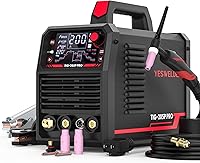
Can You Weld Aluminum With a Stick Welder?
Yes, you can weld aluminium with a stick welder, but only with the right electrode and a lot of practice. For most home projects, TIG or MIG is the practical choice, and a stick welder is best kept for steel.
On this page (7 sections)
- Can you weld aluminium with a stick welder at all?
- Why is aluminium harder to stick weld than steel?
- What electrode and setup do you need for aluminium stick welding?
- Which machine should you buy for aluminium welding?
- Is TIG or MIG the better choice for aluminium?
- When is a stick welder still the right tool?
- What should you do next if you want to weld aluminium?
Yes, you can weld aluminium with a stick welder, but only with aluminium-specific electrodes and careful preparation. For most home projects, TIG or MIG is the practical route, so treat stick as a fallback rather than a first choice.
The question comes up because a stick welder is often the first machine in a home shop. It handles steel well and costs less than an AC/DC TIG unit.
Aluminium behaves differently, though, and that changes the answer from a simple yes to a qualified one.
Can you weld aluminium with a stick welder at all?
Stick welding does work on aluminium, but it is the hardest common process for the metal. The arc has to break through an oxide layer before the puddle forms, and that layer is the main obstacle.
Aluminium oxide melts at roughly 3,600°F, while the aluminium underneath melts near 1,220°F. A stick arc has to remove the oxide without burning through the softer metal below it.
That narrow window is why the process feels unforgiving.
The electrode choice matters most. Aluminium electrodes are made for this job and run on DC; a steel rod will not produce a sound weld on aluminium.
You also need clean metal, because dirt and oil sit on top of the oxide and make the arc wander.
If you only need to join two pieces of aluminium once and you already own a stick welder, it can be done. If aluminium is a regular material in your shop, the machine choice is the bigger decision.
Why is aluminium harder to stick weld than steel?
Aluminium conducts heat away fast and hides its heat colour, so the puddle is hard to read. Steel gives you visual clues as it heats; aluminium stays silver until it is close to melting.
Heat runs away from the weld zone quickly in aluminium, so the arc has to work harder to build a puddle. Then the oxide skin forms again almost at once, which is why cleaning and arc control matter so much.
A steady hand helps, but it does not replace the right process.
The metal also moves as it heats. Thin sheet can warp before you see the puddle properly, and thick sections soak up heat and need more current.
Stick electrodes add slag that has to be chipped away between passes, and slag removal on aluminium is fiddly.
Steel rewards a stick welder because the process matches the metal. Aluminium punishes it unless your electrode, polarity and preparation are all correct.
That gap is the honest reason most guides steer beginners elsewhere.
What electrode and setup do you need for aluminium stick welding?
You need an aluminium electrode rated for DC, the correct polarity, and a clean joint. The electrode package states the current range and polarity, so match those to your machine before you strike an arc.
Clean the aluminium with a stainless steel brush kept only for aluminium. Remove oil and paint from the weld zone and a little beyond it.
Clamp the work firmly, because movement during the weld spoils the bead.
Set the current in the electrode maker's range and keep a short arc. Aluminium electrodes run differently from steel rods: the coating and core behave differently, so practise on scrap first.
Chip slag between passes and clean the surface again.
Fit a stick welder with enough output for the thickness you plan to join. A machine with adjustable hot-start current helps the arc strike, but it does not fix poor cleaning or the wrong electrode.
Check polarity twice, since some electrodes run on electrode-negative and others on electrode-positive.
Can you weld aluminium with a stick welder on thin sheet?
Thin aluminium is the hardest case for stick, and it is where TIG takes over for most home welders. Sheet under about 1/8 inch warps quickly, and the arc burns through before you can build a puddle.
Use a TIG machine with AC output for thin aluminium. AC cleaning breaks up the oxide layer as you weld, and the foot pedal lets you taper the heat at the end of a run.
That control is why TIG is the standard for thin aluminium work.
If you want to see how the wire-fed option compares for the same material, read can you weld aluminum with a mig welder. MIG is faster on thicker aluminium, and a spool gun keeps the soft wire feeding cleanly.
Which machine should you buy for aluminium welding?
An AC/DC TIG machine is the best single purchase for aluminium at home, and MIG is the better pick if you also weld thicker sections. Stick stays useful for steel and outdoor work, but it is not the aluminium machine.
The three boxes below cover the realistic options. Scores weigh specs and features against what an aluminium job actually needs.
Best for aluminium wire feed and mixed jobs
The ARCCAPTAIN MIG200 is a 6-in-1 machine with gas and gasless MIG, stick, spot welding and lift TIG, plus an optional spool gun connector. It feeds solid wire from .023 to .035 inch, flux core from .030 to .035 inch, and aluminium wire in .035 and .040 inch.
Synergic MIG matches current and wire speed to the wire size and gas, which helps a beginner get a usable bead. It stores 10 preset settings and has a large LED display you can read without lifting your helmet.
It runs on 110V or 220V and weighs about 14.1 oz with a shoulder strap included. The spool gun and TIG torch are not included.
Best for aluminium on a TIG budget
The LOTOS TIG200ACDC runs 200A of AC square-wave output for aluminium and also does DC TIG and DC stick. The square wave gives accurate aluminium welds, and the foot pedal controls heat precisely while you work.
It runs on 110V or 220V input, so it fits a home shop with either outlet. The kit includes the TIG torch, stick clamp, foot pedal, argon regulator and a voltage converter pigtail.
Lotos backs it with a 30-day money-back guarantee and a 1-year replacement warranty on top of a 3-year limited warranty. The trade-off is weight at 37 lb and a footprint of 28 x 13 x 17 inches, so plan bench space.
Best for thin aluminium and pulse control
The ARCCAPTAIN AC/DC TIG 200A is a 7-in-1 machine covering DC TIG, AC TIG, pulse TIG in several waveforms and stick. AC TIG suits aluminium alloys and other non-ferrous metals, while the pulse and triangular waveforms cut heat input so thin metal welds quickly without burning.
The maker says it handles 0.5MM-5MM aluminium and 0.5MM-10MM metals. A large LED screen shows the welding parameters, and the MCU digital control covers pre-flow, up-slope, down-slope, crater current, AC frequency and AC balance.
It weighs 26.5 lb. The foot pedal is not included, so budget for one if you want pedal control.
Is TIG or MIG the better choice for aluminium?
TIG wins on thin aluminium and clean cosmetic welds; MIG wins on speed and thicker sections. Pick TIG when the part is visible or thin, and pick MIG when you have volume to get through.
TIG with AC output gives you the cleaning action that breaks the oxide layer and the heat control to stop thin sheet from warping. It is slower, and it takes practice to keep the filler rod moving at the right pace.
For a repair on a bike frame or a small bracket, the extra control is worth it.
MIG feeds filler wire continuously, so it is faster and easier to learn. Aluminium wire is soft and kinks easily in a standard torch, which is why a spool gun helps.
Use MIG when you weld thicker aluminium and want speed over finish. Our TIG vs stick welding comparison covers the process differences in more depth.
When is a stick welder still the right tool?
Keep a stick welder for steel, outdoor work and jobs where wind would blow away MIG shielding gas. It is the toughest process for dirty or rusty metal, and it runs on simple equipment.
Stick is the practical choice for farm repairs, gate and trailer work, and any steel job away from the shop. A stick welder with a good hot-start handles rods well and needs only the rod, the clamp and the work lead.
Our ARCCAPTAIN stick welder review looks at one option for this kind of work.
For aluminium, though, the electrode supply and the arc control make it a specialist's tool. If aluminium is a small part of your work and steel is the rest, a multi-process machine that covers MIG and stick is the more useful buy than a dedicated stick unit.
What should you do next if you want to weld aluminium?
Pick the process first, then the machine. If your aluminium is thin or visible, buy an AC/DC TIG unit.
If you also weld thick aluminium and steel, a multi-process MIG machine with a spool gun connector covers more ground.
If you only weld steel and need aluminium once, a local welding shop can run the job for less than a new machine.
So, can you weld aluminium with a stick welder? Yes, with aluminium electrodes, DC polarity and clean metal.
It just is not the process most home welders should buy for aluminium. Choose TIG for control and MIG for speed, and keep stick for the steel jobs it does best.
Frequently asked questions
What electrode do you use to stick weld aluminium?
Aluminium stick electrodes are sold for this purpose and run on DC. They are not the same as steel electrodes, and using a steel rod on aluminium will not produce a sound weld.
Ask your supplier for the aluminium electrode that matches your machine's polarity.
Is TIG or MIG better for welding aluminium?
TIG gives you the cleanest control on thin aluminium because AC cleaning breaks up the oxide layer as you weld. MIG is faster on thicker sections and easier to learn, and a spool gun feeds the soft aluminium wire without kinking it.
Can you weld aluminium with a stick welder outdoors?
Yes, stick welding handles wind and drafts better than MIG, which makes it useful outside. You still need to clean the aluminium first, because the oxide layer and any dirt will spoil the weld no matter how stable the arc is.