TIG vs MIG Welder: Which Should You Buy? (October 2026)
Choose MIG for faster general fabrication and TIG for more control over neat, precise welds. The right TIG vs MIG welder depends on your materials, project pace and willingness to manage a more involved welding process.
On this page (8 sections)
- TIG vs MIG welder: which should you buy?
- What changes between TIG and MIG welding?
- Which welder is easier for a new user?
- Which process gives you more control over the weld?
- Which process suits different materials and jobs?
- What setup and ongoing supplies should you consider?
- Which machine fits your shop?
- TIG vs MIG welder: what is the final choice?
MIG is often the quicker choice for general fabrication, while TIG gives you more control over neat, precise welds. The right TIG vs MIG welder depends on your materials, project pace and willingness to manage a more involved process.
MIG feeds wire through the torch as you work. TIG keeps the filler separate, so you guide the torch and add filler by hand when the joint needs it.
That difference affects pace, learning curve, setup and bead appearance. These 4 options show the tradeoffs between MIG-first machines and TIG-focused machines.


TIG vs MIG welder: which should you buy?
Buy a MIG welder for quicker work on common fabrication and repair jobs; choose TIG when fine control and a clean bead matter more. Either process can make strong welds when the setup and technique suit the job.
MIG can suit brackets, frames and general shop projects. Wire feeds continuously, so you can focus on torch angle, travel speed and the joint.
TIG asks for more coordination. You control the torch with one hand and feed filler with the other, which slows the process but gives you closer control over the weld pool.
The machines in this comparison also differ in process range. The MIG models include other modes, while the two TIG options provide Stick or MMA alongside TIG functions.
What changes between TIG and MIG welding?
MIG uses a continuously fed wire electrode; TIG uses a tungsten electrode and separate filler when needed. The operator's work and the equipment around the arc shape how each process feels.
How does MIG work?
MIG feeds a wire electrode through a torch, where it melts into the joint. Gas MIG uses shielding gas, while flux core wire provides its own shielding and can be used without a gas cylinder.
Continuous wire feed makes it easier to keep moving along a longer seam. You still need to choose suitable wire, feed speed, voltage and shielding for the material and conditions.
For a gasless setup, the YESWELDER 135A MIG Welder supports flux core MIG and includes .030 in and .035 in flux core wire. Its 110V input and synergic controls may suit a home shop that wants fewer setup steps.
How does TIG work?
TIG creates an arc from a tungsten electrode, while filler rod is added separately when the joint needs it. This lets you adjust filler placement and heat with more direct control.
That control takes practice. You have to coordinate torch movement, arc length and filler feed, and the work tends to progress more slowly than MIG.
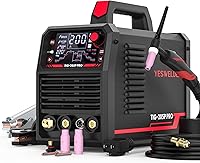
The YESWELDER TIG-205P offers DC TIG and Pulse TIG, along with Stick mode. It has HF starting and auto-sensing 110V/220V input, but it cannot weld aluminum.
Which welder is easier for a new user?
MIG is usually easier to pick up because its wire feeds automatically, while TIG adds a separate filler-handling task. Simple controls can help, but they don't replace practice and safe setup.
MIG's continuous wire helps you maintain a steady pace once the settings suit the material. Flux core also avoids a shielding gas cylinder, which can make the first setup simpler.
The YESWELDER 160A MIG Welder has synergic control that adjusts recommended voltage and wire feed speed when you select material thickness or change amperage. It also supports manual adjustment if you want to fine-tune those settings.
TIG takes more coordination from the start. If neat placement and close control are worth a slower learning curve for your projects, that extra effort may be a good fit.
Our plain guide to welding machine types explains how MIG, TIG, Stick and other processes differ before you choose a machine.
Which process gives you more control over the weld?
TIG gives you more direct control over the arc and filler; MIG gives you a steady wire feed that can make long welds faster. More control helps when the job benefits from it and you have time to use it.
With TIG, you manage the torch and filler separately. That can help on detailed work where bead placement and appearance matter, but it requires coordination and patience.
MIG combines wire feed and torch movement in one process. It can be a better fit when you need consistent progress across repeated joints, though the right settings and joint preparation still matter.
When is TIG control useful?
TIG may suit small, visible welds or work where the bead needs careful placement. Pulse controls can give you another way to manage the TIG cycle, though adjustments vary by machine.
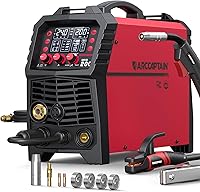
The ARCCAPTAIN TIG 205P Pro offers DC, Pulse, Lift and Spot TIG modes, plus MMA. Its adjustable controls and app support let you tune several TIG parameters.
It is DC only, so it isn't suitable for aluminum. Consider the material and required TIG features before treating a larger mode list as a better fit.
When is MIG the practical choice?
MIG fits jobs where continuous feed and a steady pace matter more than hand-feeding filler. It can suit general fabrication, repairs and repeated joints when the material and machine are matched.
The YESWELDER 160A MIG Welder supports Gas MIG and Flux Core MIG, plus Stick and Lift TIG. That range can be useful when one shop handles varied work, but the Lift TIG torch is extra.
If your work calls for TIG on some days and MIG on others, a multi-process machine may be worth considering. Our guide on whether a multi-process welder is worth it walks through that tradeoff.
Which process suits different materials and jobs?
Choose by the material and joint first, then check the machine's process capabilities. "TIG" and "MIG" alone don't tell you whether a particular welder can handle a job.
Steel fabrication may point buyers toward MIG for speed and TIG for precision. Thickness, fit-up, position, environment and the required finish also affect the choice.
Aluminum needs special attention. Some MIG welders can handle it with a suitable setup, but neither TIG model listed here supports aluminum welding.
For MIG-specific aluminum considerations, read Can You Weld Aluminum With a MIG Welder?. If aluminum TIG is your goal, look for an AC TIG machine and verify its capabilities.
Thin sheet metal can be welded with either process when the settings and technique match. TIG's control can help with careful work, while MIG may be quicker once dialed in.
What setup and ongoing supplies should you consider?
MIG setup depends on whether you use gas or flux core, while TIG requires a torch, tungsten and filler suited to your work. Include the added equipment and practice time in your choice.
Gas MIG needs a compatible shielding gas setup. Flux core can work without a gas cylinder, but wire choice and outdoor conditions still matter.
TIG requires more separate consumables and setup choices, including tungsten and filler rod. Some machines also need a torch or pedal purchased separately.
The YESWELDER 160A MIG Welder's Lift TIG torch is extra. The YESWELDER 135A MIG Welder also requires an extra Lift TIG torch, even though Stick and flux core MIG are available.
Plan for the power connection too. The YESWELDER 160A MIG Welder and YESWELDER TIG-205P support 110V/220V input, while the YESWELDER 135A MIG Welder is 110V and the ARCCAPTAIN TIG 205P Pro is 120V/240V.
Which machine fits your shop?
Choose the process you expect to use most, then decide whether extra modes justify more controls and setup. A machine that matches your regular work is more useful than one with features you rarely need.
The YESWELDER 135A MIG Welder is a focused choice for 110V flux core MIG work. The YESWELDER 160A MIG Welder adds Gas MIG and dual voltage, along with Stick and Lift TIG modes.
For TIG-focused work, the YESWELDER TIG-205P provides DC and Pulse TIG plus Stick. The ARCCAPTAIN TIG 205P Pro offers several TIG modes and app control, with DC-only output.
If you need both MIG and TIG, check torch requirements before buying. Read our multi-process welder guide to see whether one machine makes sense for your mix of jobs.
TIG vs MIG welder: what is the final choice?
Pick MIG for a faster start on general shop work; pick TIG for closer control over bead placement and filler. Choose the machine by its specific process features, input power and included setup.
For gasless MIG on 110V, consider the YESWELDER 135A MIG Welder. For more process options and dual voltage, the YESWELDER 160A MIG Welder supports both gas and flux core MIG.
For TIG control, the YESWELDER TIG-205P offers DC and Pulse TIG, while the ARCCAPTAIN TIG 205P Pro adds several TIG modes and app controls. Neither listed TIG machine is suitable for aluminum.
External guidance: See the Miller Welding MIG vs TIG comparison for another overview of the process differences.
Frequently asked questions
Is a TIG or MIG welder better for beginners?
MIG is often easier to start with because wire feeds continuously, while TIG requires more coordination of the torch and filler rod. The YESWELDER 135A MIG Welder has synergic control, which pairs recommended voltage with wire feed speed.
Can a MIG welder weld aluminum?
Some MIG setups can weld aluminum, but the machine and wire feeding arrangement must suit it. Check the welder's supported processes and accessories before choosing.
For more detail, see our guide to welding aluminum with a MIG welder.
Can these TIG welders weld aluminum?
Neither TIG option here is suitable for aluminum. The YESWELDER TIG-205P is described as unable to weld aluminum, and the ARCCAPTAIN TIG 205P Pro has DC output only.
Check for an AC TIG machine if aluminum TIG welding is a requirement.
Can one machine do both MIG and TIG?
Some multi-process welders support both, but the TIG setup and included accessories vary. The YESWELDER 160A MIG Welder supports MIG and Lift TIG, though its Lift TIG torch must be bought separately.
See whether a multi-process welder is worth it before deciding.
Which process is better for thin metal?
TIG gives you direct control over the arc and filler, which can help when you need careful heat and placement. MIG can also work on thin metal when its settings and technique suit the material.
For auto body and sheet metal, see our thin sheet metal welder guide.