Are YesWelder Arc Welders AC or DC?
YesWelder arc welders are DC output machines. They take AC from a 110V or 220V outlet and convert it to DC for welding, which gives a steadier arc and works well with common rods like 6011, 6013 and 7018.
On this page (8 sections)
- Are YesWelder arc welders AC or DC?
- How does a DC inverter change AC wall power into a welding arc?
- What does DC output mean for rod choice?
- What does DC output mean for the metal you weld?
- How do dual-voltage YesWelder machines handle AC input?
- Which YesWelder arc welder fits a home project?
- How do you confirm a welder's output before you buy?
- So, are YesWelder arc welders AC or DC?
YesWelder arc welders are DC output machines. They take AC from a 110V or 220V outlet and convert it to DC for welding, which gives a steadier arc and works well with common rods like 6011, 6013 and 7018.
That matters if you're shopping for a home stick welder. The "AC or DC" label tells you how the arc behaves, which rods run well, and whether the machine suits thin sheet or heavier stock.
This guide sorts out what YesWelder's arc machines actually put out and how to choose one.
Are YesWelder arc welders AC or DC?
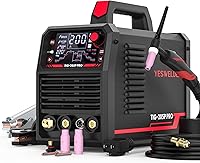
They are DC machines. The YESWELDER 205A Stick Welder takes AC from the wall and converts it to DC at the torch, so the current flows one way instead of reversing 60 times a second.
DC is the reason these small inverters weld so smoothly. A steady one-way current holds a tighter arc, throws less spatter on thin metal, and keeps the puddle easier to read.
It also runs 7018 low-hydrogen rods better than most cheap AC buzz boxes.
The "AC" in a product title usually describes the input power, not the welding current. A 110V or 220V wall outlet is AC, and the inverter inside the welder changes it.
That's why you'll see "dual voltage" next to "DC inverter" on the same machine.
How does a DC inverter change AC wall power into a welding arc?
The inverter rectifies AC to DC, then switches it at high frequency before stepping it down to welding current. The end result at the stinger is low-voltage, high-current DC.
Here's the short version. Wall AC goes through a rectifier and becomes DC.
The inverter chops that DC into a fast pulse, a transformer drops the voltage and raises the current, and an output stage smooths it back into steady DC. The fast switching is why these machines weigh about 8 lb instead of 100 lb.
That design also gives you controls a transformer welder can't easily offer. Adjustable Hot Start and Arc Force, both with 1-10 levels on the YESWELDER 205A, tune how the arc starts and how hard it pushes when you hold a short arc.
A digital LED display shows your current setting without lifting your helmet.
If you want the basic definitions first, what is a arc welder explains the process and the parts in plain terms.
What does DC output mean for rod choice?
DC runs 6011, 6013 and 7018 well, and 7018 especially benefits from it. Rods labeled DC or DCEN/DCEP are the natural fit for these machines.
The rod number tells you the coating type and the current it likes. 6013 is a general-purpose rod that runs on AC or DC and starts easily, which makes it a good first rod.
6011 is an all-position rod that handles dirty or rusty steel, and 7018 is a low-hydrogen rod for stronger joints on clean metal.
The YESWELDER 205A lists 6010, 6011, 6013 and 7018 among its supported rods. 6010 is the fussiest of the group, so if it sticks or sputters, 6011 is the easier DC substitute.
The ARCCAPTAIN 200A names the same four rod types. Buyers often mention that a steady DC arc makes 6013 feel almost self-guiding on flat stock.
What does DC output mean for the metal you weld?
DC is the better match for thin sheet, stainless and general repair work. It keeps heat input more controlled than AC on light gauge steel.
On 1/8 in and thinner mild steel, a smooth DC arc lets you run lower current without the rod snuffing out. That reduces burn-through on body panels, gates and trailer repairs.
Stainless runs on DC too, though you'll want the right rod and a steady hand.
AC still has a place. It handles thicker 6013 work and some dirty, heavy sections, and older AC transformer welders are cheap to buy used.
For a home project, DC wins on control and finish, which is what most first-time stick welders actually want.
Current setting is the other half of the job. On 1/8 in steel, many hobbyists start around 90-110 amps with a 3/32 in rod and adjust from there.
The digital display makes that setting repeatable.
How do dual-voltage YesWelder machines handle AC input?
They accept both 110V and 220V AC and adapt to the supply. That's the "AC" part of the story, and it's about the outlet, not the arc.
Dual voltage matters because not every garage has a 220V circuit. A 110V outlet lets you run the machine at reduced top current, which is fine for thinner metal and lighter rods.
A 220V outlet opens up the full output for heavier stock.
The YESWELDER 205A reaches up to 205 amps and ships with a 220V to 110V adapter. The ARCCAPTAIN 200A also runs 110V/220V and includes the matching adapter.
Both machines compensate for voltage fluctuation, so an unstable grid won't fry the electronics.
Here's the practical rule: check your outlet before you buy. A 220V circuit gives you more headroom, while a 110V garage outlet suits light repair work.
Pick the rod and current to match the supply you have.
Which YesWelder arc welder fits a home project?
The YESWELDER 205A is the pick for most home stick welding, because its 205 amps, dual voltage and 1-10 Hot Start and Arc Force controls cover thin sheet and heavier repair in one box. It weighs about 8.4 lb and runs 6011, 6013 and 7018 without drama.
Choose it if you want one machine for gate repairs, trailer frames, and farm equipment. The LED display shows current and mode clearly, so you can set it with your helmet down.
If you want a lighter stick machine for tight spaces and don't need the top end, the ARCCAPTAIN 200A below is the smaller option.
Who should choose the YESWELDER 205A?
Choose it if 205 amps and dual voltage matter more than saving weight. The extra current helps on 1/4 in stock and thicker joints where 200 amps starts to feel tight.
The 1-10 adjustable Hot Start gives you a fast, reliable arc strike, and Arc Force adds current when you push the rod close to the puddle. Anti-Stick backs both up by stopping the electrode from gluing itself to the work.
It's also a Lift TIG machine. Add a torch and you can run DC lift-start TIG on steel and stainless, though not aluminum.
That makes it a reasonable step up for someone learning both processes. If you mostly weld 1/8 in and thinner, the top-end amps are more than you need.
Who should choose the ARCCAPTAIN 200A?
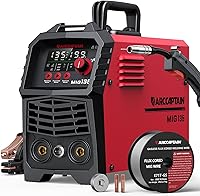
Choose the ARCCAPTAIN 200A if you want a very light stick welder that still runs the common rods. It weighs about 7.2 lb and includes a shoulder strap, so it's easy to carry to a fence line or a job in the yard.
Its Synergic control matches current and voltage once you select the electrode diameter, which takes some guesswork out of setup for a beginner. You can still adjust current by hand when you want to.
It also offers Stick and Lift TIG modes, with adjustable Hot Start and Arc Force, plus anti-stick to keep the rod from freezing in the puddle, and a 2-year quality service promise.
The trade-off is top-end current and the absence of a TIG torch in the box. If you plan to TIG weld much, factor in the extra torch cost.
Our full ARCCAPTAIN stick welder review is a good place to weigh it against the YESWELDER before you decide.
What if you want more than stick welding?
A multi-process machine adds MIG and flux-core wire feed to the stick and TIG modes. That's the better buy if you'll weld thin sheet more often than heavy stock.
The YESWELDER 160A MIG Welder is a 4-in-1 unit: flux-core MIG, gas MIG, stick and Lift TIG. It runs 6010, 6011, 6013 and 7018 in stick mode and handles 2 lb and 10 lb spools of 0.030 in and 0.035 in wire.
Its Synergic control sets voltage and wire speed when you pick a thickness, which suits beginners.
The catch is the 160A top end. It's plenty for body panels and light fabrication but not the machine for thick structural steel.
For heavier stick work, the 205A is the stronger choice.
How do you confirm a welder's output before you buy?
Look for "DC inverter" and the rod list in the specs. Those two lines tell you more than the headline amp rating.
A DC inverter label confirms the output type. The rod list tells you which electrodes the maker supports, and whether 6010, 6011 or 7018 is in the mix.
A dual-voltage spec tells you which outlets will work. And an amp range near 200 gives you room for thicker steel than a 140A box.
Skip the marketing language about "AC/DC" unless the specs separate input voltage from output current. A machine that lists 110V/220V input and DC output is doing what this whole article describes.
If you're still comparing stick machines for a garage or home shop, our roundup of the best stick welders for home shops lines up the top options by job. And if TIG is your goal, the best TIG welders for beginners covers DC lift-start and scratch-start machines that fit a first setup.
So, are YesWelder arc welders AC or DC?
They're DC machines fed by AC wall power. The inverter takes 110V or 220V AC and turns it into steady DC for the arc, which is why these welders run 6011, 6013 and 7018 rods so cleanly and stay light enough to carry.
Pick the YESWELDER 205A if you want 205 amps and full Hot Start and Arc Force control for heavier home repairs. Pick the ARCCAPTAIN 200A if weight and simple Synergic setup matter more.
Pick the YESWELDER 160A MIG Welder if you want MIG and flux-core welding alongside stick.
The decision rule is simple: match the output type to your rods, match the input voltage to your outlet, and match the top-end amps to the thickest metal you plan to weld. When someone asks are YesWelder arc welders AC or DC, the answer for these machines is DC output, and that's the spec to shop by.
Frequently asked questions
Can a DC stick welder run 6010 rods?
Many DC inverter stick welders can run 6010, but 6010 is fussy on low-voltage input. The YESWELDER 205A lists 6010 among its supported rods, so check the rod range on any machine before you buy.
If 6010 keeps sticking, a 6011 rod is the easier DC choice.
Do I need a 220V outlet for a DC arc welder?
Not always. Dual-voltage machines like the YESWELDER 205A and ARCCAPTAIN 200A run on either 110V or 220V, though 220V gives more top-end current.
For light work on thin steel, a 110V outlet is often enough, and both machines ship with an adapter.
Is AC welding ever better than DC?
AC is handy for heavy 6013 work and for older transformer machines that are cheaper to build. DC gives a smoother arc and less spatter on thin metal, which is why almost every small inverter stick welder sold for home use is DC.
For a garage or farm project, DC is the safer default.
Can I TIG weld with a DC stick welder?
Only lift-start TIG, and only if the machine offers that mode. The YESWELDER 205A and ARCCAPTAIN 200A both list a Lift TIG mode, but you need to add a TIG torch.
DC lift TIG handles steel and stainless, not aluminum.