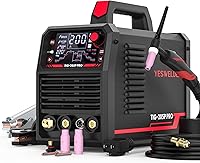
What Is an Arc Welder?
An arc welder is a machine that joins metal by creating an electric arc between an electrode and the workpiece. The arc's heat melts the metal and the filler so the joint fuses as it cools.
On this page (8 sections)
- What is a arc welder and how does the arc form?
- What are the main types of arc welder?
- How does a stick arc welder work for a home project?
- What does the electrode do in an arc welder?
- What safety gear does an arc welder require?
- Which arc welder is right for your home project?
- What does an arc welder cost and what should you check?
- So, what is a arc welder in practice?
An arc welder joins metal by creating an electric arc between an electrode and the workpiece. The arc's heat melts the base metal and the filler so the joint fuses as it cools.
This guide explains what an arc welder is, the main types for home shops, and how to pick one for your project.
The arc is the core of the process. Current jumps a small air gap and gives off intense light and heat in one spot, which is why the metal melts right where you point the rod.
Everything else on the machine exists to control that arc, from the current setting to the hot start and anti-stick features.
What is a arc welder and how does the arc form?
A simple answer: a power source pushes current through an electrode, and the gap between electrode and metal creates the arc. The arc is the bright flame you see, and its heat does the welding.
The machine turns wall power into welding current. With stick welding, the rod makes contact and lifts a fraction to strike the arc.
The current then runs through the rod, across the gap, and into the work through the ground clamp.
The circuit has to be complete, so the ground clamp must be on clean, bare metal. A loose or painted ground makes the arc weak and unsteady, and the rod will stick or sputter instead of running a smooth bead.
That is why the ground clamp is one of the two cables a stick machine ships with, alongside the electrode holder.
IGBT inverter technology is what most modern home units use inside. It switches the power at high frequency to hold a stable arc in a light box, which is how a 160A machine can weigh about 11 lb instead of the heavy transformer welders of the past.
What are the main types of arc welder?
Stick, TIG, MIG and flux-cored machines are all arc welders, because each one strikes an arc to melt metal. They differ in the electrode, the shielding and the skill level they ask of the user.
Stick welding, also called shielded metal arc welding, uses a coated rod that burns away to shield the weld. It works outdoors, handles dirty steel and suits repair work on a farm or in a garage.
TIG welding uses a tungsten electrode plus a separate filler rod, and it gives the cleanest looking bead. If that process interests you, our explainer on whether a TIG welder is an arc welder shows how the two overlap.
How does a stick arc welder work for a home project?
A stick machine is the simplest arc welder to run, and it covers most home repairs. You set the current for your rod, strike the arc and keep a steady gap as the rod melts.
The coated rod burns off flux that shields the puddle from air. Slag forms on top and you chip it off with a hammer after the bead cools.
Both machines below ship with a brush and hammer for that cleanup, plus a 10 ft electrode holder and ground clamp on the ARCCAPTAIN.
Look for three features that make learning easier. Hot start adds current at the first touch so the rod strikes without sticking.
Anti-stick cuts current when the rod fuses to the work. A digital display shows your setting without guesswork.
Which stick arc welder fits a starter?
The DEKOPRO 160A Stick Welder is a good first pick for small jobs. It runs on 110V or 220V and uses IGBT inverter technology for a steady arc.
It handles mild steel, stainless steel and cast iron.
It weighs about 11 lb, so you can carry it to a bench or a gate repair. The kit includes an electrode holder, a work clamp and a brush.
A closed loop control keeps the output steady when the supply dips, which helps on a long extension cord. The hot start and anti-stick features take away the two most common beginner problems on a first bead.
The manufacturer also lists an energy-saving design that cuts copper and iron loss and raises welding frequency, which matters on a small circuit. It carries an ETL certificate, so the electrical build has been inspected for safety.
Pick a different machine if you want a lift TIG mode later. This one is stick only.
Which stick arc welder suits a two-process shop?
The ARCCAPTAIN 200A Stick Welder adds lift TIG as a second mode. It runs on 110V or 220V, and the LED screen shows your setting clearly without lifting the helmet.
The synergic control matches current and voltage once you pick a rod diameter, which removes a step while you learn. It runs 6010, 6011, 6013 and 7018 rods, so common home rods work.
You can also dial arc force and hot start to your own taste rather than the factory preset.
A lift TIG mode lets you add a torch later for thinner work on stainless steel. The torch is a separate item, so plan for it if you want both processes.
The supplier rates a 2-year quality service and lists TÜV and ANSI testing, with over current, over voltage, overload and overheating protection built in. Our full ARCCAPTAIN stick welder review breaks down the settings.
What does the electrode do in an arc welder?
The electrode carries the current and often becomes the filler metal. On stick, the rod is the electrode and it melts into the joint.
On TIG, the tungsten electrode holds the arc while a separate rod adds filler.
Rod choice changes the result more than most beginners expect. A 6013 rod is forgiving and runs on clean steel.
A 7018 rod gives a stronger weld but needs a drier surface and more care.
Match the rod diameter to the metal thickness and the current setting. A thick rod on thin sheet burns through, while a thin rod on thick plate runs cold.
Check the rod sizes the machine lists before you buy, because a welder that does not take your rod limits what you can build.
What safety gear does an arc welder require?
A welding helmet is essential because the arc gives off ultraviolet and infrared light. A flash can hurt your eyes within seconds, so the helmet goes on before the rod touches metal.
An auto-darkening lens helps on home projects because it stays clear until the arc strikes, then darkens. The Hobart 770890 Auto-Darkening Welding Helmet covers this well with a wide view and four arc sensors.
Switch it to grind mode when you clean the weld, and the lens stays clear. The Hobart runs on one CR2 battery and accepts a cheater lens if you need magnification.
Shade, sensitivity and delay each have their own analog knob, so you can set the lens for a low-current bead or a bright outdoor job. The power control turns the lens on at the strike of an arc and off again after, which saves the battery.
Add leather gloves, a flame-resistant jacket and closed shoes. Keep a fire extinguisher within reach and clear paper, rags and sawdust from the area before you strike an arc.
Which arc welder is right for your home project?
Decide from the metal and the job. For repair work on steel, gates, trailers and farm gear, a stick arc welder covers it.
For thin stainless steel or a show bead, add a TIG mode.
Use this rule: pick stick if the metal is 1/8 in or thicker steel and the surface is not spotless. Pick a machine with lift TIG if you also plan thin stainless work or want a smoother bead.
Our list of the best stick welders for home shops ranks more options.
For a beginner, the V variable is practice more than the machine. A unit with hot start and anti-stick removes the two hardest parts of the first session.
If TIG is the direction you want, compare the TIG welders that suit beginners before you buy. Many of those machines also run stick, so one unit can do both jobs.
What does an arc welder cost and what should you check?
Home arc welders sit in the budget to mid-range tier, and price mostly follows current output and the number of modes. A 160A stick-only unit costs less than a 200A stick and TIG combination.
Check four things before you buy. Confirm the input voltage matches your outlet, since 110V is the usual home supply and 220V needs a dedicated circuit.
Check the duty cycle so you know how long it can run before a rest. Confirm the rod sizes the machine lists.
Look at what comes in the box, since a ground clamp and electrode holder save a second trip.
Weight matters for a machine you carry around. The DEKOPRO is about 11 lb and the ARCCAPTAIN is lighter still, so either travels well.
A shoulder strap on the ARCCAPTAIN frees a hand on the walk to the job.
So, what is a arc welder in practice?
An arc welder is a tool that runs current through an electrode to strike an arc and fuse metal, and the stick type is the most practical one for a home shop. Match the machine to your metal and voltage, and add a proper helmet before the first bead.
For most home projects, the DEKOPRO 160A covers stick repairs on steel without fuss. Step up to the ARCCAPTAIN 200A if you want lift TIG for thinner work, and pair either with the Hobart 770890 helmet.
Start with plenty of scrap and a low current, and the arc will feel natural within a few practice runs.
Frequently asked questions
Can an arc welder run on a normal household outlet?
Often, yes. Many home arc welders accept 110V, which runs from a standard outlet.
Some also take 220V for more output.
Match the machine's input voltage to the outlet you have and keep the breaker and cord within their rating.
Do you need a welding helmet with an arc welder?
Yes. The arc gives off ultraviolet and infrared light that hurts eyes even in a short flash.
A helmet with an auto-darkening lens, like the Hobart 770890, darkens at the strike of an arc and protects your eyes.
Is an arc welder the same as a stick welder?
A stick welder is one kind of arc welder. Stick, TIG, MIG and flux-cored machines all strike an arc, so all are arc welders.
The word arc welder most often means the stick type in home shops.
See our guide on whether a TIG welder is an arc welder for the family tree.
What metal can a home arc welder join?
A stick arc welder handles mild steel, stainless steel and cast iron with the right rod. Some also take aluminum with a matching electrode.
Check the machine's materials list and pick a rod made for each metal.
What safety gear do you need for arc welding?
A helmet with a dark lens is the first item, plus gloves, a long-sleeve jacket and closed shoes. Work in a clear area away from flammables and keep good airflow for the smoke a rod gives off.