Can You Weld Cast Iron With a MIG Welder?
Yes, you can weld cast iron with a MIG welder, and nickel filler wire on a preheated part gives the best chance of a sound repair. The catch is that cast iron is brittle and cracks easily, so the preparation around the weld matters as much as the machine.
On this page (8 sections)
- Is MIG a good process for welding cast iron?
- Can you weld cast iron with a MIG welder using the right wire?
- How do you prepare a cast iron part before MIG welding?
- What MIG settings work for cast iron?
- Should you preheat cast iron before MIG welding?
- How do you check a cast iron weld and finish it?
- Does a MIG welder for cast iron need to be a big machine?
- What should you do when the weld keeps failing?
Yes, you can weld cast iron with a MIG welder, and nickel filler wire on a preheated part gives the best chance of a sound repair. The catch is that cast iron is brittle and cracks easily, so the preparation around the weld matters as much as the machine.
A MIG welder can join cast iron because it feeds filler wire and shields the puddle with gas. That does not make cast iron behave like mild steel.
The metal has very little stretch, so it fights the shrinking weld and cracks when it cools too fast.
Is MIG a good process for welding cast iron?
MIG is a workable process for cast iron, though it is not the first choice for every casting. It suits brackets, housings, manifold flanges and small machine parts that you can clean, preheat and cool slowly.
It is less suited to large, highly stressed castings where the repair has to carry real load.
The reason is the wire. MIG runs best on nickel-based filler for cast iron, and nickel costs more than plain steel wire.
That is a filler cost, not a machine cost. A standard MIG welder with gas shielding runs the wire fine.
Stick welding is the older repair method for cast iron, and brazing is another option for low-stress jobs. MIG earns its place when you already own a MIG machine and want a neat, controllable bead on a smaller part.
Can you weld cast iron with a MIG welder using the right wire?
Yes, and the wire choice decides most of the result. Nickel-based wire is the standard filler for cast iron because it stretches more than steel filler and spreads the stress across the weld.
Pure nickel wire gives the softest, most forgiving weld. Nickel-iron wire is cheaper and still reduces cracking risk, and it machines more easily after welding.
Either one runs on a MIG welder set up for the wire size you have.
Cast iron repair wire is usually sold in small spools because the jobs are small. Check the wire diameter against the drive rolls on your machine, since a mismatched roll slips and feeds unevenly.
Read the filler label and set the shielding gas or gasless setup to its recommendation.
How do you prepare a cast iron part before MIG welding?
Clean the metal first, then preheat it evenly, and keep the part as still as you can. Cast iron surfaces hold oil, paint and carbon, and all three spoil the weld.
Grind or wire-brush the weld area back to bare metal. Castings often have a hard skin and pockets of sand or scale just under the surface, so cut a V groove for a full-penetration repair and clean the groove as well as the face.
Brake cleaner on a rag removes oil, and castings from engines and pumps are usually oily.
Preheat the whole part, not just the joint. A propane torch or an oven works for smaller pieces, and even warmth lets the weld cool at a rate the metal tolerates.
Keep the torch moving so one side does not run hotter than the other, and clamp or brace the part loosely so it cannot shift as it cools.
Can you weld cast iron in place with a MIG welder?
You can weld small cast iron fittings in place when the part cannot come off easily. A cast bracket on a machine frame is a typical case.
The limits are heat and access. You cannot preheat evenly on a frame, and you cannot cool slowly in sand.
If the part carries a load, holds fluid or sits near something that heat will damage, take it off first. A repair you can preheat and cool on the bench has a much better chance of lasting.
What MIG settings work for cast iron?
Use low heat, a short bead and a slow, steady travel speed. Cast iron does not need high amperage.
The goal is to melt the filler and fuse the edges without putting a wide heat-affected zone around the repair.
Set the voltage and wire speed on the low side of what the thickness suggests. Run a test bead on scrap first if you have any.
A cast iron bead should look flat and wet at the edges, not piled and cold.
Keep each bead short. A long continuous pass builds heat and pulls the part as it cools.
Let the weld cool between beads, or peen the bead lightly with a hammer while it is still warm to relieve stress.
What should you watch on a multi-process machine?
The Lincoln Electric Power MIG 215 MPi is a useful choice if you want a single machine for cast iron and general work. It welds MIG, flux-cored, stick and DC TIG, with 120V and 230V input so you can plug into either supply.
That matters when you want the stick option for a larger casting without buying a second machine.
It also runs flux-cored wire without gas, which is handy for a repair in a garage that cannot be ventilated for gas shielding. The machine weighs 48 lb, so moving it to the job is realistic for one person.
Should you preheat cast iron before MIG welding?
Preheat is the safest step, and slow cooling is the reason. Warming the part reduces the gap between the weld temperature and the rest of the casting, so the weld shrinks less against cold metal.
That gap is where cracks start.
Heat the whole part to a warm, even temperature rather than blasting one area. A torch works on small parts, and a kitchen oven on low works on anything that fits.
Keep the torch moving and check the part by hand in several spots, not just the middle.
After welding, cool the part slowly. Bury it in dry sand, wrap it in a fire blanket or leave it in the warm oven as it cools.
Do not quench it in water and do not hit it with air. A fast drop in temperature is the most common reason a cast iron repair fails.
How do you check a cast iron weld and finish it?
Let the part cool completely, then look at the weld edges and test the fit. A cast iron weld that is going to fail usually shows a crack line at the toe of the bead, where the weld meets the parent metal.
Clean the bead with a wire brush and look along both edges. A hairline crack means the repair should come out and go again with more preheat.
If the part has to hold a load, inspect it after it has been in service for a while as well.
Cast iron machines well, so the weld can be ground flush and drilled if needed. Nickel-iron filler machines more easily than pure nickel.
Use a carbide burr or a grinder for the bulk and a file for the edges.
Protect your eyes for the whole job. A fixed-shade helmet works, and an auto-darkening helmet makes it easier to line up the torch on a small casting.
Does a MIG welder for cast iron need to be a big machine?
No. Cast iron repairs are usually small, so a modest machine is enough.
The job needs stable, low-current control more than peak output.
A 160A MIG welder covers most brackets and housings.
Duty cycle matters more than headline amps. Cast iron jobs are short beads with cooling time between them, so the machine gets plenty of rest.
A light, portable unit is easier to move to a part than a heavy cabinet.
Can you weld cast iron with a MIG welder like the YESWELDER 160A?
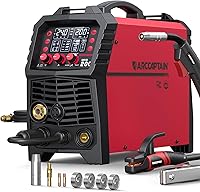
The YESWELDER 160A runs MIG, flux-cored, stick and lift TIG, and its synergic control sets voltage and wire feed from the thickness you select. That helps on a first cast iron repair, because you are not guessing the settings.
It weighs 19.4 lb and takes 2 lb or 10 lb spools of 0.030 in and 0.035 in wire. The stick mode gives you a fallback for a larger casting without a second machine.
What should you do when the weld keeps failing?
Change the preparation, not the wire first. A cast iron weld that cracks again and again usually traces back to oil in the metal, uneven preheat or fast cooling.
Re-clean the groove, warm the whole part and bury it in sand afterward.
If the part carries real load or holds pressure, a welded repair may not be the right answer. A replacement casting or a specialist repair shop is safer for brake, steering and pressure parts.
A weld that looks fine on the bench can fail under stress.
For a low-stress job, the process is straightforward: nickel wire, a clean groove, even preheat, short beads and slow cooling. That is the answer to can you weld cast iron with a MIG welder: yes, when the preparation respects how the metal behaves.
If you are also weighing other metals for the same machine, can you weld aluminum with a MIG welder covers the wire and gas differences. For a first machine, our guide to the best MIG welder for home use covers what to look for.
Shoppers on a tighter budget can compare the best MIG welder under 500 options, and can you weld copper with a MIG welder covers another repair metal.
Pick a multi-process machine if cast iron is one of several jobs in your shop. Pick a light 110V/220V unit if cast iron is a small side job.
Either way, buy the nickel filler first and practice on scrap cast before you touch the part that matters.
Frequently asked questions
What wire should I use to MIG weld cast iron?
Nickel-based wire is the usual choice, often sold as nickel-iron or pure nickel filler. It flexes more like the base metal and reduces the chance of a crack at the weld edge.
The spool and the wire drive setup have to match the size your machine runs.
Can a 110V MIG welder handle cast iron?
Yes for thin sections and small repairs, because cast iron jobs rarely need big amperage. The limiting factor is heat control and travel speed, not peak output.
Thick castings are better served by a machine that offers 220V input.
Can I MIG weld cast iron with the part still in place?
Sometimes, on small brackets and fittings, but a part you can move is always easier to preheat and cool evenly. Anything carrying a load or holding pressure should come off the machine first.
Welding cast iron in place also makes it harder to keep the arc steady.
Why does my cast iron weld keep cracking?
Rapid cooling is the usual cause, because cast iron has little stretch and the weld pulls against the cold parent metal. Preheat, a short bead and slow cooling in sand or a blanket reduce the stress.
A dirty or oily surface makes the cracking worse.