What Is a TIG Welder?
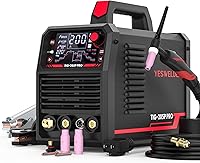
A TIG welder is a welding machine that uses a tungsten electrode and an inert argon shield to melt metal, while you feed filler rod by hand. The arc gives you precise control over thin aluminum, stainless and steel, so TIG suits clean, detailed work more than fast, heavy fabrication.
On this page (8 sections)
- How does TIG welding actually work?
- What do the AC/DC and square wave labels mean?
- What does a foot pedal do, and do you need one?
- Is a TIG welder an arc welder?
- What does it take to set up a TIG welder at home?
- Should you buy TIG, MIG or stick for a home project?
- Do you need special gear to TIG weld safely?
- What can you actually weld with a TIG machine?
What is a TIG welder? A TIG welder is a welding machine that uses a tungsten electrode and an argon gas shield to melt metal, while you feed filler rod into the puddle by hand.
The arc gives you precise heat control on thin aluminum, stainless and steel.
The letters stand for tungsten inert gas. Because the electrode doesn't melt away like a stick rod, the arc stays stable and clean.
That's why TIG shows up on bicycle frames, thin sheet, intake piping and repair work where appearance matters.
How does TIG welding actually work?
TIG welding strikes an arc between a tungsten electrode and the metal, and the argon shield keeps oxygen out. The arc does the melting while your other hand dips filler rod into the puddle.
The tungsten electrode is not the filler; it just carries the current.
That separation is the whole idea. You can vary the heat without changing how much metal you add.
On thin metal, you lower the amps and tap the pedal so the puddle stays small. On thicker sections, you raise the heat and feed more rod.
The torch carries gas through a ceramic cup around the electrode. If the shield fails or the gas flow is wrong, the weld goes gray and porous.
That's the main failure you watch for as a beginner. The regulator in the LOTOS kit lets you set that gas flow, but the cylinder itself is on you to supply.
The other thing the setup gives you is a choice of start. The LOTOS torch uses high-frequency start, which means you don't touch the tungsten to the work to get going.
That keeps the electrode clean, and a clean electrode is what keeps the arc steady on thin metal.
What do the AC/DC and square wave labels mean?
DC is the normal setting for steel and stainless; AC is for aluminum. Square wave refers to the shape of the current on alternating current, which helps keep the arc stable while cleaning the aluminum oxide skin.
LOTOS uses a 200A AC square wave inverter for aluminum welding and lists the same machine for stainless and mild steel. The AC setting alternates direction many times a second.
One half cleans the surface and the other half adds heat, and the square wave makes the switch sharper.
DC TIG is what you'll use most. It runs smooth on mild steel and stainless and gives you tighter control of the puddle.
Most home projects start and end in DC, so you don't need AC until aluminum enters the picture. The inverter design also lists 80 percent power efficiency, which matters when you're running the machine off a household circuit for longer sessions.
What does a foot pedal do, and do you need one?
A foot pedal adjusts the welding current while your hands stay on the torch and filler rod. You press harder for more heat and ease off to taper a weld out.
The LOTOS TIG200ACDC ships with a foot pedal. That's a real advantage for thin work, because you can start on low amperage and dial up as the puddle forms.
You also get a clean finish at the end of a bead instead of a crater.
If your machine has no pedal, you set amps on the panel and control heat by torch distance and travel speed. That works for heavier material.
For 22-gauge sheet or delicate joints, the pedal is worth having.
The pedal is also the part that changes how you learn. With your hands free, you can practice feeding filler without stopping to reach for a knob.
The heat is under your foot the whole time, so the rhythm of dip and move stays unbroken.
What does the LOTOS foot pedal setup add?
The pedal in the box means you don't buy it as an extra, and the same machine carries a 10-200A TIG range and a 15-200A DC stick range. The package also includes the MMA stick clamp and a 220V/110V converter pigtail, so the same cabinet covers pedal-controlled TIG and simple stick work.
That matters when a repair on thicker steel shows up and you'd rather not buy a second machine.
Is a TIG welder an arc welder?
Yes, TIG is one form of arc welding, because the heat still comes from an electric arc between the electrode and the work. It's just a shielded arc with a non-consumable electrode instead of a melting stick.
Our explainer on is a TIG welder an arc welder goes through the family tree and what separates the processes.
The practical difference shows in what the arc is asked to do. With stick welding, the rod burns away and adds the filler.
With TIG, the arc only supplies heat, and you decide when and where the filler goes. That's why TIG feels slower and more controlled.
The same power source can often run both. The LOTOS TIG200ACDC runs TIG and DC stick from one cabinet, with a 10-200A TIG range and a 15-200A stick range.
That dual output is useful when one project needs fine TIG work and another needs a quick stick repair on thicker steel.
The stick side of that machine has an adjustable hot striking current, which helps the arc start without sticking the rod. It runs acid and basic electrodes, so general repair rods work without fuss.
For a beginner, having both processes on one box is a cheaper way to find out which one you actually reach for.
What does it take to set up a TIG welder at home?
You need the machine, an argon cylinder and regulator, a tungsten electrode, a torch and filler rod. Most TIG boxes include the torch and regulator, so the gas cylinder and the filler are the extras you buy.
The LOTOS package includes the power supply, TIG torch, foot pedal, argon regulator and a 110/220V converter pigtail. It also comes with a ground clamp and a consumable set.
That covers the machine side of the setup.
Argon gas is the big running cost and the reason TIG welding has a higher entry ticket than flux-core MIG. You also need a clean, ground metal surface.
TIG is unforgiving of rust, oil and mill scale, so wire-brush and wipe the joint before you strike an arc. The machine runs on dual voltage at 50/60Hz, so it adapts to either a 110V outlet or a 220V circuit without a manual switch.
Should you buy TIG, MIG or stick for a home project?
Pick TIG for thin, clean, precise work; pick MIG for speed on mild steel; pick stick for thick, dirty metal outdoors. The right choice depends on what you plan to build.
Our comparison of TIG vs MIG welder lays out the trade-offs in more detail.
TIG wins on appearance and control. It's the process for aluminum bike parts, stainless kitchen work and thin sheet that would blow through under a hotter process.
It's slower, and it demands two-handed coordination.
MIG is easier to learn and faster on steel. The YESWELDER 160A runs flux-core MIG, gas MIG, stick and lift TIG, and it handles 2LB and 10LB spools in .030 in and .035 in wire.
Synergic control sets voltage and wire speed when you pick a thickness, which helps a beginner get a usable bead quickly. It also weighs 19.4 lb, so it's easy to move between jobs.
Stick is the simplest and toughest option. It runs on basic electrodes like 6010, 6011, 6013 and 7018, works outdoors in wind, and handles thicker, dirtier steel.
For a first machine on general repair, our ARCCAPTAIN 200A stick welder review covers what a budget stick box offers. TIG is the better second machine, or the first one if your projects are thin and visible.
Do you need special gear to TIG weld safely?
Yes, an auto-darkening helmet, gloves and good ventilation are the basics. TIG arcs are bright and give off UV, so eye protection is not optional.
The helmet lens has to darken the moment you strike.
The Hobart 770890 has a 9.3 in widescreen viewing area, four independent arc sensors and a grind mode. The wide view helps when you're watching a small puddle and dipping filler, because you see more of the joint around the torch.
Analog knobs set shade, sensitivity and delay.
TIG also needs clean gloves with good feel. A bulky stick glove makes filler feeding clumsy.
Work in a ventilated space and keep the argon cylinder secured upright. If you're shopping machines, our roundup of the best TIG welders for beginners covers what to look for at each price tier.
What can you actually weld with a TIG machine?
Steel, stainless, aluminum and many other metals, within the machine's amp rating and your skill. A 200A box like the LOTOS handles thin to moderate thickness.
Very thick plate is a better fit for MIG or stick at higher amps.
The limits matter more than the list. TIG on 1/4 in steel needs a lot of amps and good bevel prep.
Thin aluminum wants AC and a pedal. Stainless wants DC and a clean surface.
Decide on the metal and thickness first, then match the machine.
For most home shops, a 200A AC/DC TIG covers the widest range. If aluminum is off the table, a DC-only machine is simpler and cheaper.
Either way, practice on scrap before you touch a finished part. TIG rewards patience more than any other process.
Frequently asked questions
Is TIG welding hard to learn?
Yes, TIG takes more practice than MIG or stick because you control the arc, the torch and the filler rod at the same time. The foot pedal helps by letting you adjust heat without lifting the torch.
Do I need argon gas for TIG welding?
Yes, TIG welding uses argon as a shielding gas to keep oxygen away from the weld. Most TIG setups include a regulator, but you still need to supply a gas cylinder.
Can a TIG welder weld thick steel?
It can, but only within its amp rating and with the right prep. A 200A machine handles moderate steel, while thick plate on high amperage is better served by MIG or stick.
What is a foot pedal for on a TIG welder?
The foot pedal controls the welding current while your hands stay on the torch and filler rod. That lets you taper the heat at the end of a weld and ease into thin metal without stopping.